
LOW-HEAD DAM BASICS
What is a Low-Head Dam?
Low-head dams are constructed in-water barriers that span the width of a waterway.
The Water Resources Development Act of 2024 defines them as a “river-wide artificial barrier that generally spans a stream channel, blocking the waterway and creating a backup of water behind the barrier, with a drop off over the wall of not less than six inches and more than 25 feet.”
Many are also called “weirs” or “run-of-river dams” because of the way water flows over the top of the dam. You can find additional names used for these structures in our Frequently Asked Questions.
Low-head dams were built to regulate water to operate mills, generate power, grow crops, supply water, or deepen waterways for recreation. While some of these low-head dams still serve their purpose, many have outlived their initial purpose and original owners.

How low-head dams differ from other larger dams
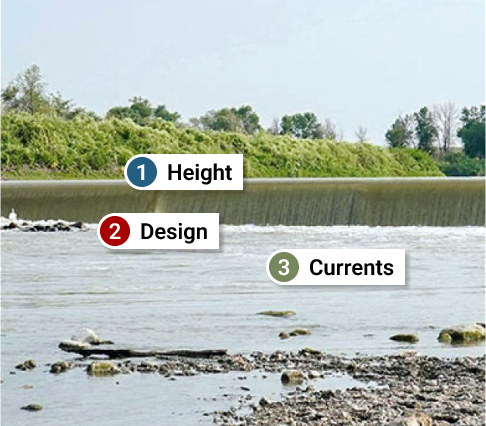
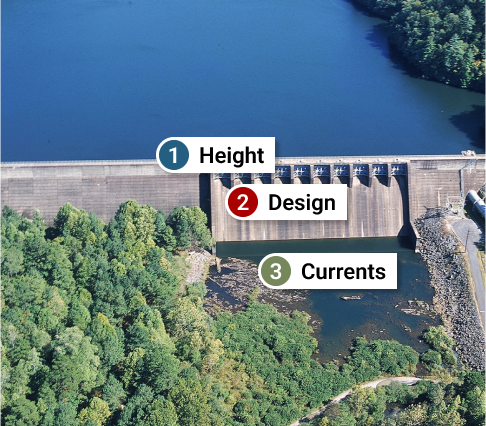
Did You Know?
The term “head” is an engineering term that refers to the height of the water behind the dam. Since low-head dams are typically less than 25 feet tall, they are considered to be small or to have “low-head” when compared to taller dams where the height of water behind the dam can be much greater than 25 feet. Low-head dams are often called “weirs” or “run-of-river dams” because water is intended to flow freely over the top of the dam.
Dangers of low-head dams
Nearly 800 fatalities have been recorded at low-head dams in the U.S., according to the Low Head Dam Fatalities Database
Water flowing over low-head dams downstream can create a recirculating current - the current pushes people and objects underwater and spins them around, making it almost impossible to escape. For this reason, low-head dams have also been called “drowning machines.”
View Safety Tips to learn more about actions you can take to avoid the dangers of low-head dams.
Low-Head Dams: Get Out and Scout
Low-head dams pose serious dangers to kayakers, anglers, swimmers, and other waterway users who are unaware of their presence and struggle to identify them while out on the water. This animation shows how you can spot a low-head dam and why when in doubt, getting out to scout can help people stay safe on the water.

Long Tom River Drop Structure Dangers
This video by the U.S. Army Corps of Engineers Portland District highlights the lower Long Tom River drop structure in Oregon and how this low-head dam was built for flooding and irrigation but can trap unsuspecting recreators in its currents.

