
LOW-HEAD DAM BASICS
History of Low-Head Dams
History of Low-Head Dams
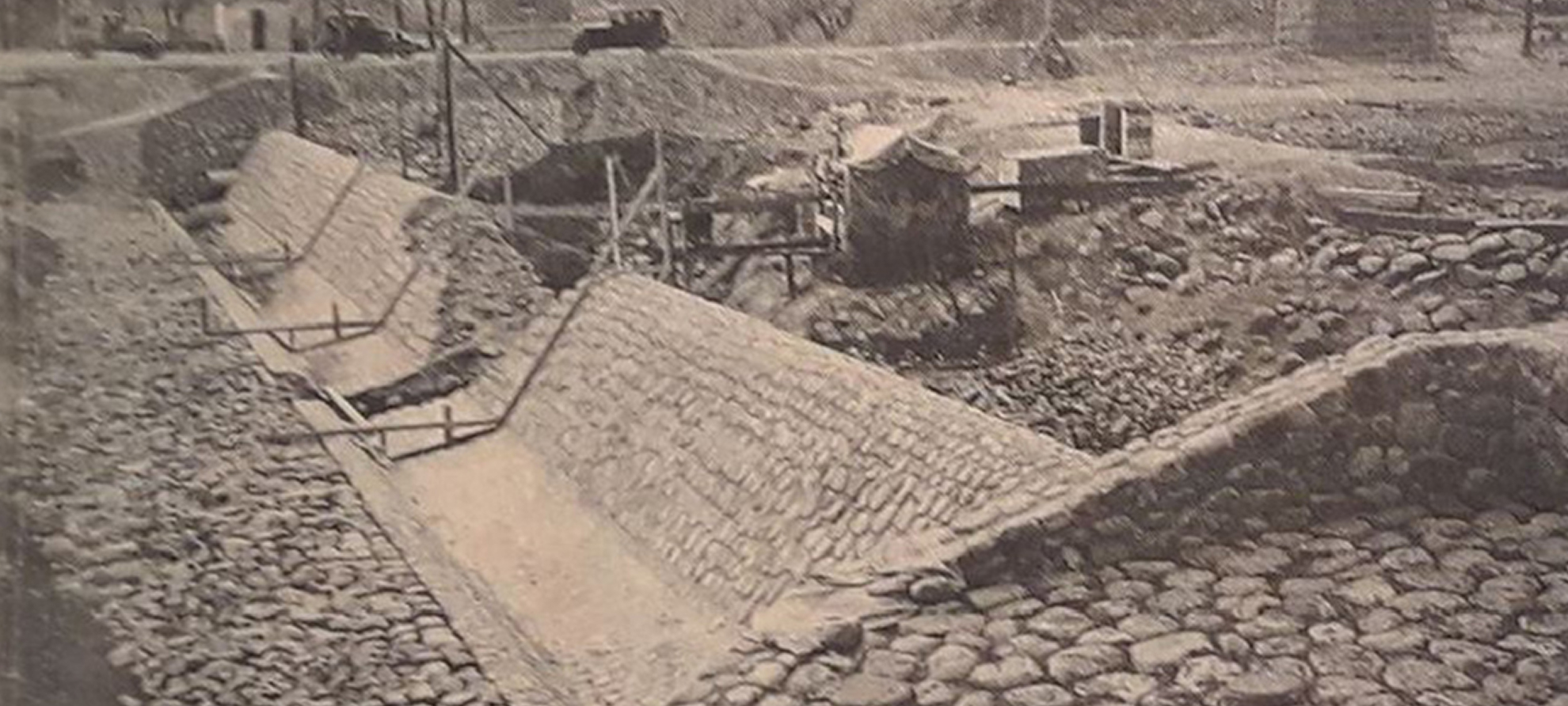
Many low-head dams were created for industry early in our nation's history. During the 1800s, a vast network of low-head dams sprang up across U.S. rivers and streams. U.S. manufacturing census data of 1840 revealed more than 65,000 water-powered mill dams in 872 counties in the eastern United States.
These structures were engineered to elevate water levels, serving a range of critical needs: enhancing municipal and industrial water supplies, generating hydropower, and redirecting water for irrigation. In addition, some of these dams were designed to form modest reservoirs for leisure activities.
A significant number of low-head dams were built by private industrialists and entrepreneurs seeking to harness water power for manufacturing purposes. Farmers and agricultural interests also played a role in constructing these dams, primarily to divert water for irrigation. While most low-head dams were constructed privately, state and local governments occasionally became involved, particularly in projects that served public utilities or transportation.
Low-head dams still exist and are in use across the country, but most have been washed out or removed. Many of the remaining structures have fallen into disrepair, forgotten and abandoned. The ownership of many of these dams has been obscured by time, too, resulting in little oversight, which can pose dangerous conditions to the public.
The aging and deterioration of these structures makes them increasingly susceptible to failure. A breach or collapse of a low-head dam can unleash a sudden surge of water downstream, causing floods that can threaten lives and property and impacting habitat and the environment.
Another alarming trend is the increasing fatality rate at low-head dams. More than 1,400 fatalities have been recorded at low-head dams in the U.S.

The Dock Street Dam was built in 1913 and crosses the Susquehanna River near Harrisburg, Pennsylvania. It has been the site of numerous fatal incidents. A PennLive investigation identified 29 victims dating bck to 1935, including at least nine children or teenagers. PennLive also found at least 28 more cases where rescuers plucked victims from death's door.
While these dams are known to exist, they've never been captured in national datasets. For example, the National Inventory of Dams was first published in the 1970s. It includes information about dams that meet specific criteria. Most low-head dams do not meet this criterion and generally have not been included in the National Inventory of Dams and have not been a focus of state dam safety programs.

Drayton Dam was located on the Red River 2 miles north of the city of Drayton, ND. It was constructed in 1964 for water supply for municipal and agricultural use, and there have been over a dozen fatalities at the dam since its completion. USACE completed a project to modify and partially remove the dam in September 2024.
Tracking low-head dams in the U.S.
There has been no process in place to track the quantity, condition, or location of low-head dams across the U.S. However, in 2022 Congress authorized the development of a national low-head dam inventory in an effort to improve oversight of and safety near low-head dams.
The low-head dam inventory is intended to include the location, ownership, description, current use, condition, height, and length of each low-head dam, and any information on public safety conditions at each low-head dam.
This builds on prior efforts by several universities, states, government, and non-governmental partners who worked to collect information on where low-head dams are and who is responsible for them. This includes the National Low-head Dam Inventory Task Force, established in 2021. Over the course of three years, the national task force located more than 13,000 low-head dams across the U.S.
The U.S. Army Corps of Engineers maintains the National Inventory of Dams, which documents all known dams in the U.S. and its territories that meet certain criteria; read more at https://nid.sec.usace.army.mil/#/about-the-nid/mission. In 2024, the agency received funding to develop a low-head dam database and scope future needs. The U.S. Army Corps of Engineers created an online platform within the National Inventory of Dams framework to view and query an initial dataset, referred to as the Low-Head Dam Inventory.
The U.S. Army Corps of Engineers used readily available data on low-head dams, generated by the task force and others. It should be noted that this initially published data has undergone minimal review and is subject to change. A process is being developed to review and improve available data and collect and include new information.
